Top Architectural Trends in America: A Definitive Guide to Modern Design
Top architectural trends in america The built environment of the United States is currently undergoing its most significant transition since the post-war suburban explosion of the 1950s. This shift is not merely aesthetic; it is a fundamental recalibration of how structures interact with their inhabitants, their carbon footprint, and the volatile ecosystems they occupy. While previous eras were defined by the “International Style” of glass and steel or the rapid-fire reproducibility of the tract home, today’s landscape is shaped by a collision of climate urgency, digital precision, and a renewed psychological desire for material tactility.
Architecture in the mid-2020s has moved beyond the “generic glass box” that dominated urban skylines for half a century. We are witnessing a move toward what theorists call “Biogenic Design,” an approach where buildings are viewed as active participants in carbon sequestration rather than passive consumers of energy. This evolution is happening alongside a radical change in domesticity, as the traditional boundaries between the workplace and the private dwelling dissolve, forcing a reimagining of spatial zoning and modular flexibility.
Understanding these changes requires looking past the surface-level trends popularized by consumer media. To see the true trajectory of the American streetscape, one must analyze the systemic drivers: the tightening of embodied carbon regulations, the integration of generative AI into structural engineering, and the rising cultural value of “adaptive reuse” over demolition. This article serves as a deep-layered reference for those seeking to understand the technical, ethical, and aesthetic pillars defining the future of American space.
Understanding Top Architectural Trends in America
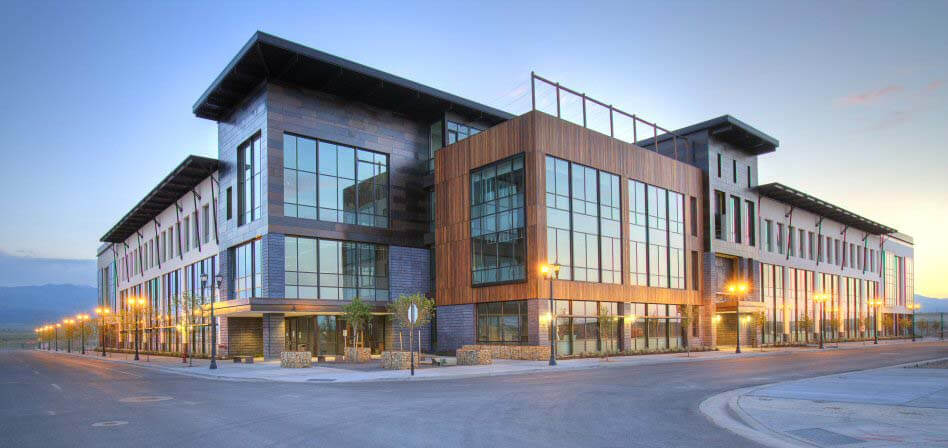
To define the top architectural trends in America, one must first navigate a thicket of nomenclature and market signals. A common misunderstanding among observers is the belief that “trends” are synonymous with “fashion,” fleeting visual preferences that cycle every decade. In a professional architectural context, however, a trend is a systemic response to a structural pressure. For instance, the current move toward mass-timber construction is not a visual choice; it is a logistical response to the high carbon intensity of Portland cement and structural steel.
One of the significant oversimplification risks in this field is the “homogenization of style.” While social media may suggest a singular global aesthetic, the reality in the United States is increasingly regionalized. A trend toward “Climate-Responsive Design” looks fundamentally different in the arid High Desert of Arizona than it does in the hurricane-prone corridors of the Gulf Coast. In the West, excellence is measured by thermal mass and fire hardening; in the East, it is measured by flood-resilient foundations and moisture-managed envelopes.
Furthermore, the “Smart Building” narrative has matured. We are moving away from overt gadgetry screens on refrigerators and complex home automation panels toward “Quiet Integration.” The trend today is for technology to fade into the building’s bones: sensors embedded in the slab to monitor moisture, AI-driven HVAC systems that learn a family’s thermal rhythm, and “Invisible Infrastructure” that prioritizes long-term resilience over immediate novelty. Understanding these trends requires a multi-perspective lens that views a building as both a financial asset and a biological container.
Deep Contextual Background: The Long Arc of the American Envelope
The American architectural narrative has always been a story of moving from abundance to engineering. In the 18th and 19th centuries, the vast forests of North America made wood the default luxury. Colonial and Georgian styles reflected European sensibilities but were adapted for a frontier with almost infinite timber. As the 19th century progressed, the Industrial Revolution introduced the “Balloon Frame,” a systemic shift that allowed for the rapid, inexpensive construction of homes, facilitating the westward expansion and the first wave of American suburbanization.
The 20th century saw the United States emerge as the global laboratory for verticality. Louis Sullivan and the Chicago School pioneered the steel-frame skyscraper, effectively decoupling the building’s skin from its structural load. This led to the “Glass Curtain Wall,” a style that symbolized American corporate dominance but introduced a century of energy inefficiency. Frank Lloyd Wright provided the counterpoint, emphasizing horizontal lines and “Organic Architecture” that sought to ground the building in its specific topography.
By the early 2020s, the limitations of these models became undeniable. The “Glass Box” was a thermal disaster, and the “Balloon Frame” suburban sprawl was ecologically unsustainable. This contextual pressure has birthed the current era: the “Material-Digital Nexus.” We are now in a phase where we use high-tech digital tools (BIM, AI) to return to “Old World” material intelligence (mass timber, stone, earth), creating structures that are technically advanced but psychologically grounded in historical permanence.
Conceptual Frameworks and Mental Models

To evaluate contemporary architecture effectively, professionals utilize specific mental models that balance performance with aesthetics.
1. The “Material Bank” Framework
In this framework, a building is not seen as a final product but as a temporary storehouse of materials. Top architectural trends in America now prioritize “Design for Disassembly” (DfD). Architects are increasingly choosing mechanical fasteners over chemical adhesives, ensuring that in 50 years, the steel, timber, and glass can be harvested and reused. This model shifts the focus from “Sustainability” (doing less harm) to “Circular Architecture” (generating value).
2. The Rainscreen Principle and Pressure Equalization
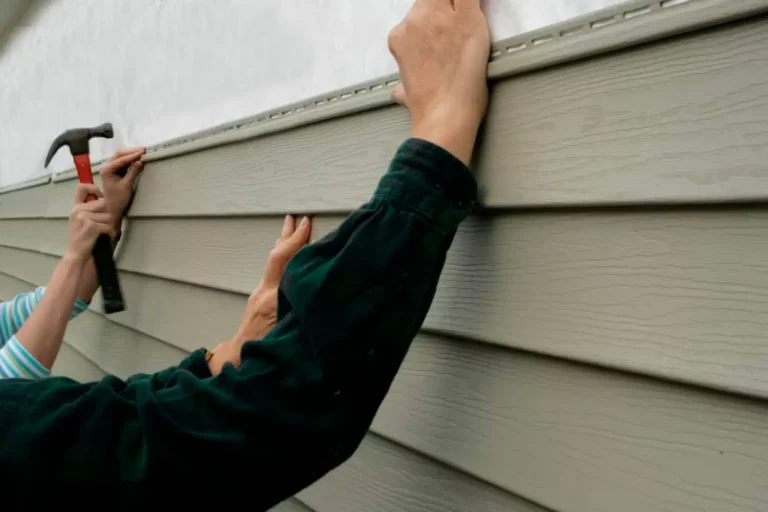
As weather events grow more intense, the framework of the “Sacrificial Skin” has become standard. Rather than trying to build a perfectly waterproof wall, modern architecture utilizes a rainscreen system, a pressurized cavity that allows moisture to drain and air to circulate behind the cladding. This framework acknowledges the inevitability of environmental stress and builds for “fail-safe” management rather than “perfect” exclusion.
3. Biophilic Reciprocity
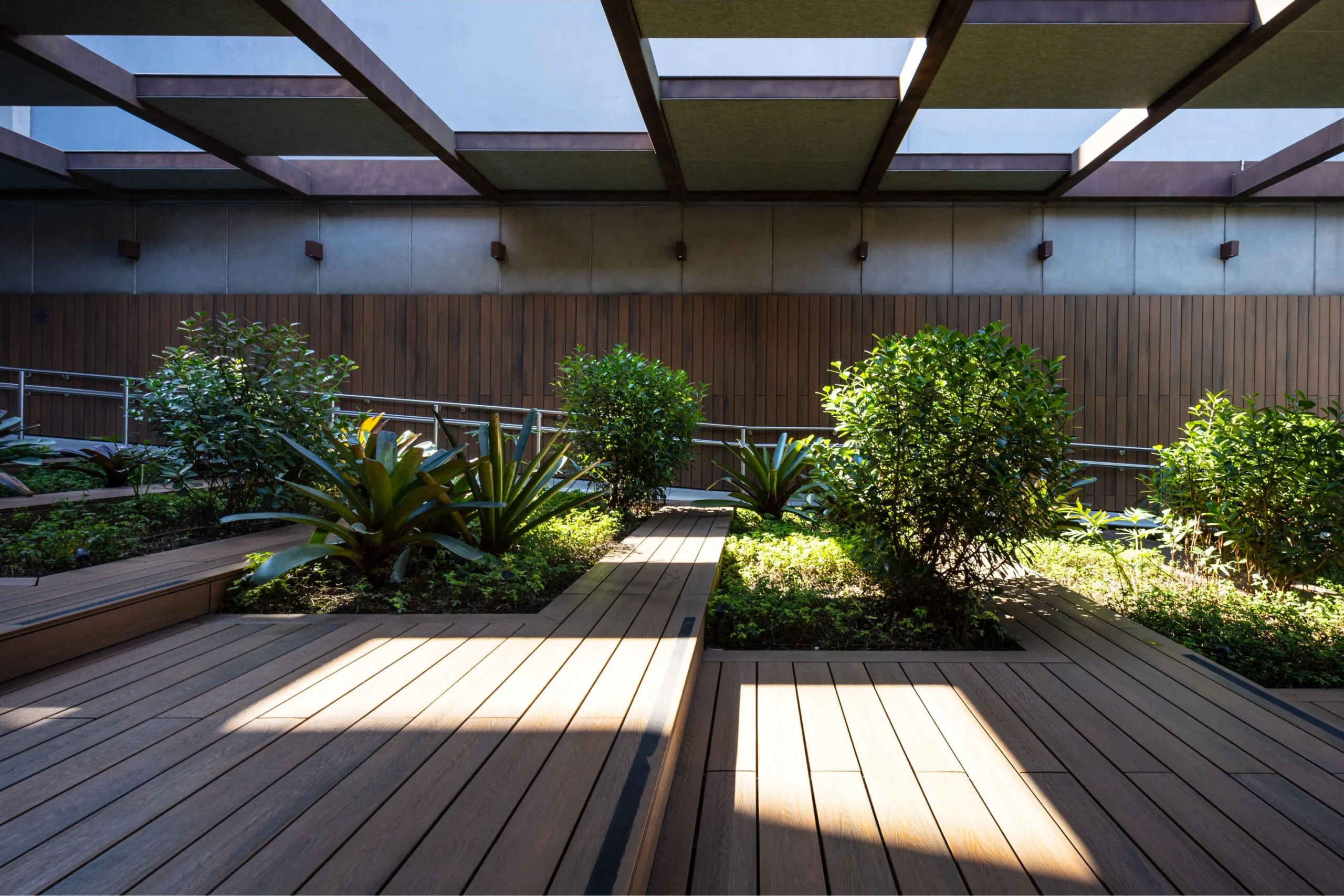
This model goes beyond adding “plants to buildings.” It views the building as a habitat that must facilitate human psychological health. The metric here is not just “green space,” but “Human-Centric High Performance.” This includes Circadian Lighting systems that shift color temperature to match the sun’s natural cycle and “Prospect and Refuge” layouts that provide both expansive views and intimate, sheltered corners.
Key Categories of Contemporary Design
The current landscape is defined by six primary categories, each with distinct trade-offs and decision logics.
| Category | Core Materiality | Primary Value | Key Trade-off |
| Mass Timber | CLT (Cross-Laminated Timber) | Carbon sequestration, speed | Higher material cost than light-frame |
| Adaptive Reuse | Reclaimed steel/masonry | Cultural heritage, lower embodied carbon | Structural “discoveries” can inflate budgets |
| Net-Zero/Passive House | High-performance glazing, EPS | Radical energy reduction | Complex airtightness requirements |
| Biogenic/Bio-Integrated | Hempcrete, mycelium, bio-concrete | Non-toxic, carbon negative | Longer drying times, less proven longevity |
| Modular/Prefab | Steel/wood modules | Quality control, less site waste | Transportation size limits, “blocky” aesthetic |
| Climate-Responsive | Region-specific (Stone, Metal) | Survival, low maintenance | Requires deep regional technical mastery |
Decision Logic: The “Value over Cost” Pivot
The selection of these categories is no longer purely financial. If a project is located in a high-fire-risk zone in California, the decision logic bypasses “cheapest” in favor of “fire-hardened” materials (steel, stone veneers). Conversely, in urban centers like New York or Chicago, “Adaptive Reuse” is favored because it avoids the regulatory and carbon penalties of new excavation.
Detailed Real-World Scenarios and Implementation
Scenario A: The Adaptive Reuse of the Office Core
As commercial office occupancy remains volatile post-pandemic, the transformation of late-20th-century office blocks into residential suites is a definitive trend.
-
The Constraint: Deep floor plates that leave central zones without natural light.
-
The Implementation: Architects are “carving” light wells into the centers of buildings or utilizing “Digital Daylight” systems that mimic the sky’s intensity.
-
Failure Mode: Ignoring the plumbing and HVAC stack density required for residential living, which can lead to catastrophic budget overruns during the “gut” phase.
Scenario B: The Wildland-Urban Interface (WUI) Home
Building in the fire-prone hills of the American West.
-
The Trend: “Zero-Clearance” design, where the house has no eaves and utilizes non-combustible cladding.
-
Decision Point: Choosing architectural steel over cedar. While cedar is traditional, steel panels provide a 100-year lifecycle in a fire zone.
-
Second-Order Effect: The use of metal creates a “Faraday Cage” effect, requiring specific planning for internal Wi-Fi and cellular signal distribution.
Planning, Cost, and Resource Dynamics
The financial landscape of American architecture is navigating a period of high volatility in material costs (steel, lumber) and a persistent labor shortage in specialized trades.
Architectural Cost Trajectory (Estimates per Square Foot)
| Sector | Initial Capital Cost (2026) | 30-Year Operational Savings | Lifecycle “Value” Index |
| Standard Light Frame | $250 – $400 | Low | 4/10 |
| Mass Timber Commercial | $450 – $700 | Moderate | 7/10 |
| Certified Passive House | $400 – $650 | High (70-90% savings) | 9/10 |
| High-Tech Smart Building | $550 – $900 | Moderate (Predictive Maint.) | 8/10 |
The “Opportunity Cost” of ignoring these trends is increasingly high. Buildings that do not meet 2026 sustainability standards are facing “Stranded Asset” risk—where they become uninsurable or unmarketable within 15 years due to rising energy costs or regulatory penalties.
Tools, Strategies, and Support Systems
The successful execution of modern architecture relies on a “BIM-AI Nexus” that moves beyond traditional drafting.
-
Digital Twins: Virtual replicas that live alongside the physical building. These allow facility managers to test “what-if” scenarios (e.g., a 10-degree heatwave) before they happen.
-
Generative Design AI: Strategies that use algorithms to test thousands of layout iterations based on daylight, airflow, and structural efficiency in minutes.
-
Real-Time Carbon Tracking: Plugins for architectural software that quantify the “Embodied Carbon” of every brick or beam as the design is being drawn.
-
AR/VR Site Verification: Using Augmented Reality on construction sites to “see through walls” and verify that mechanical systems are installed exactly as modeled.
-
Modular Precision: Strategies that involve manufacturing 80% of a building in a factory setting to reduce on-site errors and neighborhood disruption.
Risk Landscape and Failure Modes top architectural trends in America
The “Taxonomy of Failure” in modern architecture has shifted from structural collapse to “Performance Gaps.”
-
The Performance Gap: When a building is designed for “Net-Zero” but consumes 50% more energy due to occupant behavior or improper sensor calibration.
-
Moisture Entrapment: As we build “tighter” envelopes for energy efficiency, the risk of trapping moisture inside the wall cavity increases. If the ventilation system fails, the building can suffer from “Systemic Rot” within a decade.
-
Cyber-Resilience: As smart buildings become IoT-heavy, they become vulnerable to digital intrusion. A building that cannot operate its HVAC because of a ransomware attack is a critical new failure mode.
-
Material Obsolescence: Choosing highly proprietary tech or materials that don’t have a 30-year support system can leave a building unmaintainable.
Governance, Maintenance, and Long-Term Adaptation
The “Top Architectural Trends in America” emphasizes that a building is a “living governance” project. We are moving away from the “Set it and Forget it” mentality.
The Modern Adaptation Checklist:
-
Annual Thermal Scan: Using infrared cameras to detect insulation settling or moisture infiltration before it becomes a large-loss claim.
-
Sensor Recalibration: A biennial review of the smart building’s “central nervous system” to ensure occupancy sensors aren’t wasting energy in empty rooms.
-
Envelope Stress Test: In coastal or high-wind zones, a regular inspection of “Sacrificial Skins” (siding/cladding) to ensure the rainscreen cavity is clear of debris.
Measurement, Tracking, and Evaluation
How do we quantify architectural success in 2026? We look for three specific indicators:
-
Operational vs. Embodied Carbon Ratio: A successful building shows a balance where the carbon “cost” of building it is offset by the carbon “savings” of operating it within 12 years.
-
Occupant Biometric Trends: Using anonymous data to track stress levels and productivity in “Wellness-Focused” buildings. If heart rates are lower and sick days are fewer, the biophilic design is working.
-
Market Resilience Delta: Tracking how well the building holds its value compared to standard construction during economic downturns. Premium “Green” buildings now command a 7-12% higher lease rate in major US markets.
Common Misconceptions and Oversimplifications
-
“Sustainability is just about solar panels.” Correction: Sustainability is primarily about the “Building Fabric” (insulation, airtightness). Solar panels are a secondary “offset” for a potentially inefficient envelope.
-
“Mass timber is a fire hazard.” Correction: Large timber beams “char” on the outside, creating a protective layer that maintains structural integrity longer than steel, which melts and buckles at high temperatures.
-
“Open-plan is dead.” Correction: Open-plan is not dead; it is being “Acoustically Zoned.” We are seeing the use of glazed partitions and acoustic baffles that provide visual openness without the noise of the early 2010s.
-
“Smart homes are for gadgets.” Correction: Modern smart architecture is for “Predictive Maintenance” and energy load-balancing. If you notice the tech, it’s probably designed poorly.
Synthesis and Adaptive Judgment
The top architectural trends in America are ultimately coalescing toward a singular goal: Integrity. We are seeing a rejection of the superficial, whether it’s fake stucco or non-functional ornament, in favor of an “Ethic of Honesty.” A building should look like what it is made of, and it should act like where it is located.
As we look toward the 2030s, the “Trend” will be the total erasure of the boundary between the “Natural” and the “Built.” We are moving toward buildings that grow, breathe, and repair themselves. For the modern stakeholder, the judgment is no longer about “Style,” but about “Stewardship.” The buildings that will define the American legacy are those that prove a structure can be technically brilliant while remaining a quiet, tactile, and humble sanctuary for the human experience.